Powermill Macro -
Available now for Resolve 20

Hawaiki Keyer 5 - the industry’s most sophisticated Green & Blue Screen Keyer now with AI tracking
Hawaiki Keyer 5 builds on the best-in-class keying tools of Hawaiki Keyer 4 and enables you to use them more efficiently with even more powerful and intelligent tools for isolating your foreground.
It's easier than ever to maintain hair and other fine detail by creating secondary keys and dynamic garbage mattes with the new AI-powered face & object tracking and the new realtime edge tracking. And the new Crop tools allow you to exclude the edges of the screen and speed up the rendering of complex keys.
Refining your composite is faster and simpler with all the edge tools that were in a separate plug-in now integrated into Hawaiki Keyer. And we've expanded the compositing toolset with even more edge operations and the ability to resize and composite the background within the plug-in.
On top of this we've refined the UI and operation of the plug-in and optimized it for Apple silicon and HDR.
"For my money, these new features along with the depth of the adjustments available make Hawaiki Keyer 5 the best green/blue-screen keyer plug-in on the market." Oliver Peters - digitalfilms


New in Hawaiki Keyer 5
A PowerMill macro is a script of commands that automates repetitive tasks, enforces machining standards, and slashes programming time by up to 80%. Whether you are programming molds, dies, or aerospace components, mastering macros is the difference between being a user and being a power user. At its core, a PowerMill macro is a plain text file (usually saved with a .mac extension) that contains a list of PowerMill commands. When you run the macro, PowerMill reads this file line by line, executing each command exactly as if you had typed it into the command bar. The Anatomy of a Macro Unlike high-level languages, PowerMill uses an "Object-Oriented" command structure, similar to VBScript or JavaScript. For example:
STRING tool_diameter = INPUT "Enter Tool Diameter" STRING stock_height = INPUT "Enter Stock Z Height" Now, execute the commands using the variables.
// Set the tool EDIT TOOLPATH "Roughing" TOOL "20mm Endmill" 1. The Repetition Killer Consider a typical workflow: Import model, set stock, create tool, set feeds/speeds, calculate toolpath, verify, output NC code. Doing this manually for 50 tools takes hours. A macro does it in seconds. 2. Standardization (Preventing Crashes) Human error causes crashes. A macro never forgets to set a clearance plane, turn on collision checking, or apply a specific tolerance. By forcing programmers to use macros, shops ensure that every toolpath follows the "Safe Rules" checklist. 3. Batch Processing Need to recalculate all toolpaths after a design change? Need to export 100 setup sheets at midnight? Macros work while you sleep. Part 3: Writing Your First Macro (The "Hello World" of Machining) Let’s build a macro that automates the safe setup of a new job. Open Notepad++ (or the built-in PowerMill Editor) and follow along.
How does it work?
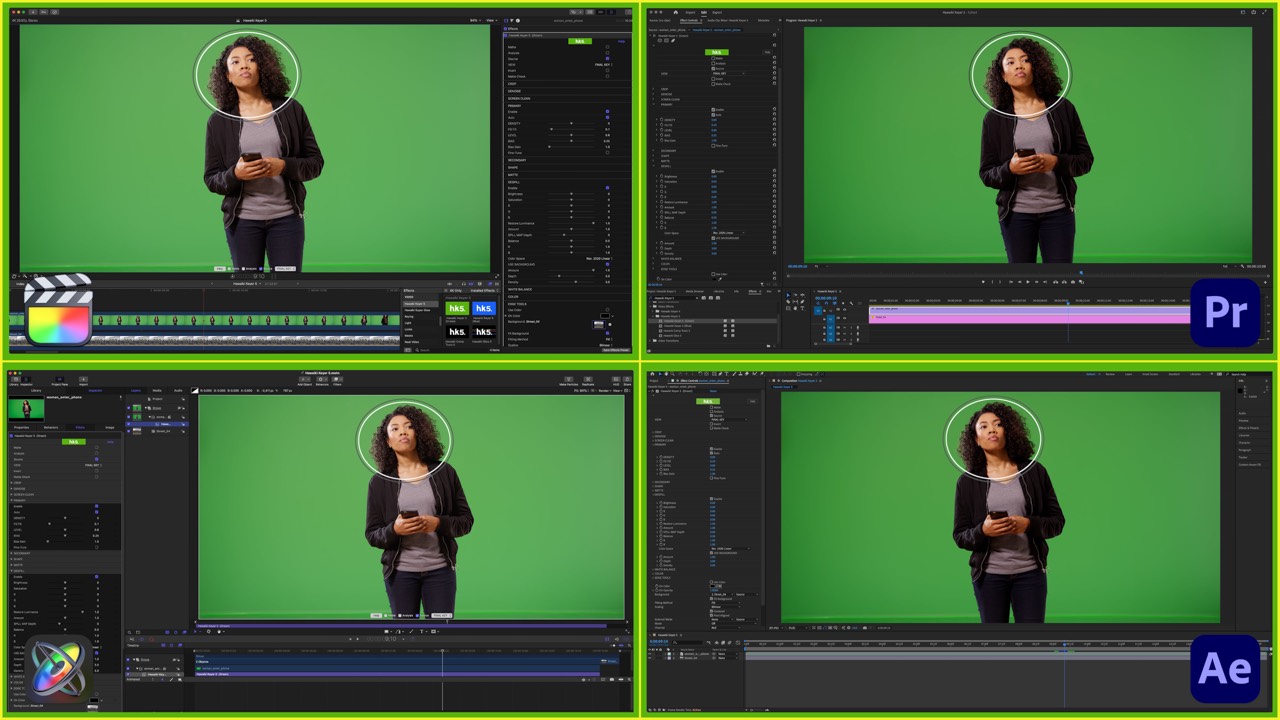
- Hawaiki Keyer 5 can be found in the Resolve Effects Library, Final Cut Pro Effects Browser, the Effects and Preset panel and Effect menu in After Effects, in Premiere Pro within the Effects panel / Video Effects and in the Motion Library tab under Filters. Simply drag it onto your clip to get started.
- The plug-in comes complete with two separate Keying modules, Hawaiki Keyer 5 (Green) and Hawaiki Keyer 5 (Blue). Select whichever is appropriate for your background color: so for green screens select Hawaiki Keyer Green and for blue screens choose Hawaiki Keyer Blue. The operation of both versions is identical but each has been optimised for its respective screen color. For this reason not all the controls work precisely the same between the two modules.
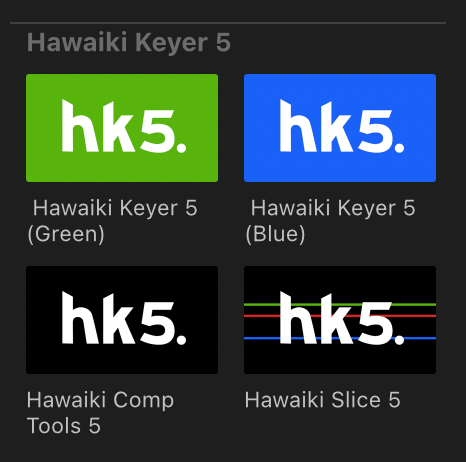
- Hawaiki Comp Tools and Hawaiki Slice can be used with either green or blue screens.
- Check out the Manual for more details.
Upgrading to Hawaiki Keyer 5
- Hawaiki Keyer 5 is a new product so doesn't overwrite your existing Hawaiki Keyer plug-ins.
- You can install Hawaiki Keyer 5 while continuing to use any older versions.
- Current users of Hawaiki Keyer are eligible for a 50% discount on the full price.
- for more information.
System Requirements
macOS: macOS 14.7 Sonoma +, macOS 15 Sequoia +, macOS 26 Tahoe
FxFactory: 8.0.27 +
Apps: DaVincei Resolve 20 +, Final Cut Pro 10.6 +, Motion 5.6 +, Premiere Pro 22 +, After Effects 22 +
Overview
Powermill Macro -
A PowerMill macro is a script of commands that automates repetitive tasks, enforces machining standards, and slashes programming time by up to 80%. Whether you are programming molds, dies, or aerospace components, mastering macros is the difference between being a user and being a power user. At its core, a PowerMill macro is a plain text file (usually saved with a .mac extension) that contains a list of PowerMill commands. When you run the macro, PowerMill reads this file line by line, executing each command exactly as if you had typed it into the command bar. The Anatomy of a Macro Unlike high-level languages, PowerMill uses an "Object-Oriented" command structure, similar to VBScript or JavaScript. For example:
STRING tool_diameter = INPUT "Enter Tool Diameter" STRING stock_height = INPUT "Enter Stock Z Height" Now, execute the commands using the variables. powermill macro
// Set the tool EDIT TOOLPATH "Roughing" TOOL "20mm Endmill" 1. The Repetition Killer Consider a typical workflow: Import model, set stock, create tool, set feeds/speeds, calculate toolpath, verify, output NC code. Doing this manually for 50 tools takes hours. A macro does it in seconds. 2. Standardization (Preventing Crashes) Human error causes crashes. A macro never forgets to set a clearance plane, turn on collision checking, or apply a specific tolerance. By forcing programmers to use macros, shops ensure that every toolpath follows the "Safe Rules" checklist. 3. Batch Processing Need to recalculate all toolpaths after a design change? Need to export 100 setup sheets at midnight? Macros work while you sleep. Part 3: Writing Your First Macro (The "Hello World" of Machining) Let’s build a macro that automates the safe setup of a new job. Open Notepad++ (or the built-in PowerMill Editor) and follow along. A PowerMill macro is a script of commands
Installation
Hawaiki Keyer 5 is available through FxFactory.

Download FxFactory to install Hawaiki Keyer 5.